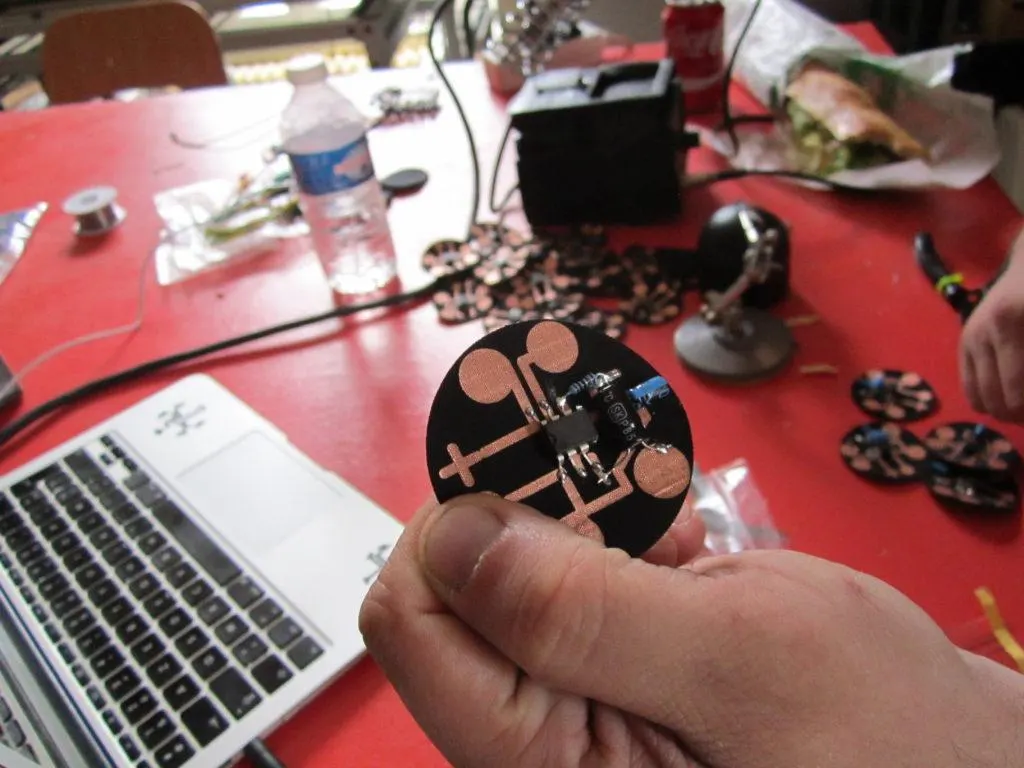
Conductive fabric boards that turn any variable resistance into a digital signal.
A Zelt conductive fabric and velostat analogue-to-digital circuit, made so design students could build their own flexible boards. It uses an NE555 rather than an ATMEGA — a simpler component — and lets any variable-resistance sensor produce a digital signal.
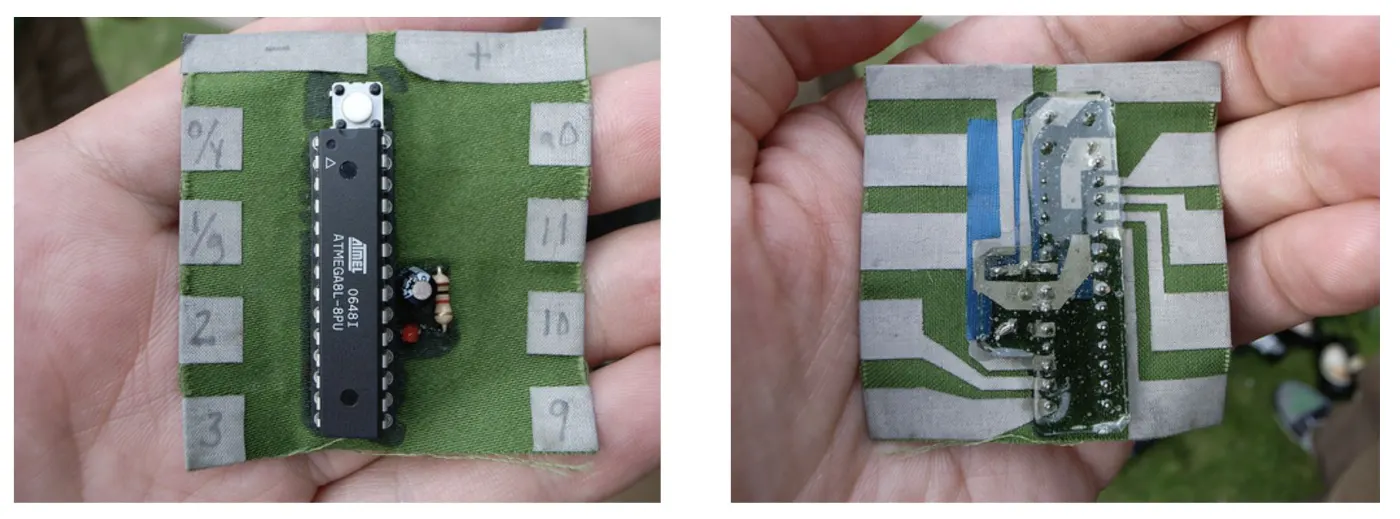
Made alongside a workshop with Leah Buechley, who developed the e-textile version of the Arduino board. These early pre-prototypes are flexible, built with Flectron conductive fabrics. Leah and Nathan Seidle at Sparkfun later mass-produced a rigid version, the Lilypad Arduino.